Maritime IPTV for Ships & Vessels in Oman

Broadway Technologies provides maritime IPTV solutions in Oman for ships, vessels and offshore operations. We design, install and support marine IPTV systems for live TV, onboard entertainment and vessel-wide information services.

Based in Ruwi, Muscat, we support vessels across Oman with tailored installations, system upgrades and ongoing technical support.

Maritime IPTV Systems Designed for Life at Sea

Broadway Technologies designs and installs maritime IPTV systems in Oman for ships and vessels that need reliable onboard television, entertainment and information services. Unlike conventional internet-based streaming, our marine IPTV solutions use satellite TV signals and the vessel's own network to distribute live channels and onboard content to screens throughout the vessel.

Our ship IPTV systems are designed for ferries, passenger boats, yachts, workboats, offshore support vessels and cargo vessels operating from Muscat, Sohar, Duqm, Salalah and other Omani ports.
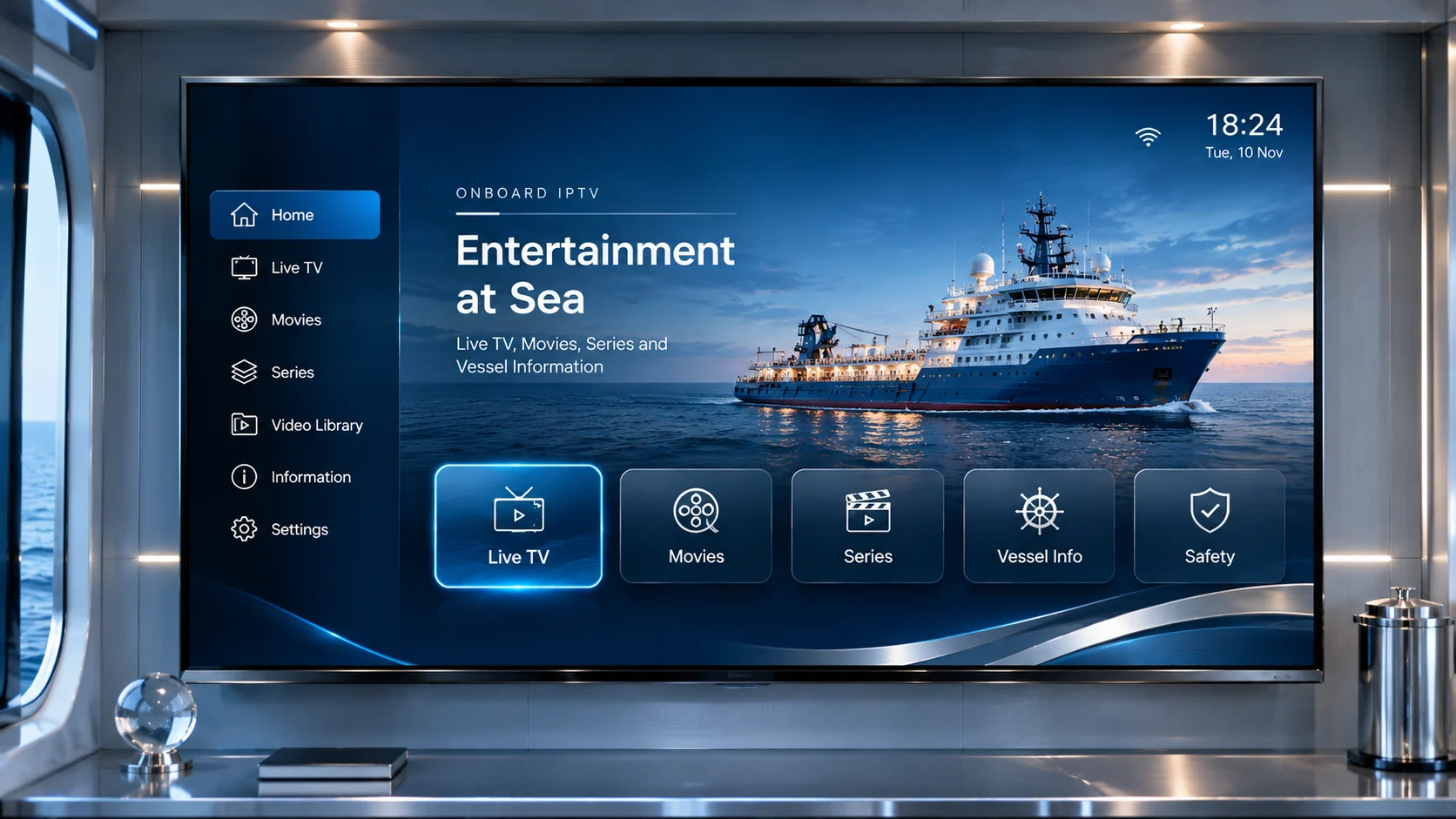
Maritime IPTV entertainment dashboard displayed on a television in a modern vessel interior, with live TV, movies, series and vessel information

How a marine IPTV system works onboard

Every system we design follows the same chain, scaled to the size of the vessel. A tug with a crew of eight needs a very different build from a ferry with three passenger lounges, but the logic is the same.

01

Signal sources

The vessel’s satellite TV (TVRO) antenna supplies live channels. HDMI sources, such as a media player or a camera feed, can be added.

02

IPTV headend

Receivers and encoders turn the channels into network streams. Where the vessel already has coax TV points, the headend can feed those too, so a retrofit does not always mean re-cabling the ship.

03

IPTV server and middleware

This manages channel lists, the video library, notices and user access. The software side is covered in more detail on our IPTV software and middleware page.

04

Ship network

Streams travel over the vessel’s wired network through managed switches, on their own VLAN so entertainment traffic never shares a path with navigation or operational systems. Viewing uses none of the satcom links.

05

Screens

Set-top boxes or IPTV-ready TVs in cabins, the crew mess, lounges and recreation rooms.

We reuse the vessel’s existing antenna and cabling where they are in good condition, and say plainly what needs replacing where they are not.

What the crew and passengers get

01 / 05

Live channels in the languages onboard

Channel lineups are built around the crew: for example all language channels, with regional news and sport, subject to satellite coverage and licensing.

02 / 05

An onboard video library

Films, series and documentaries stored on the ship’s own server, available at any hour and refreshed in port. Content for commercial vessels needs proper licensing, and we discuss licensed sources with you at the design stage.

03 / 05

Pause, rewind and recording

Crew work in shifts and miss live broadcasts, so pause, rewind and recording matter more onboard than they do ashore, where the server specification supports them.

04 / 05

A ship information channel

Daily notices, port schedules, menus, weather and messages from the master or ship manager, shown on the same screens.

05 / 05

Guest screens for passenger vessels

On ferries and charter yachts, a branded guest screen with route information, safety video and onboard offers, extended to public areas with onboard digital signage.
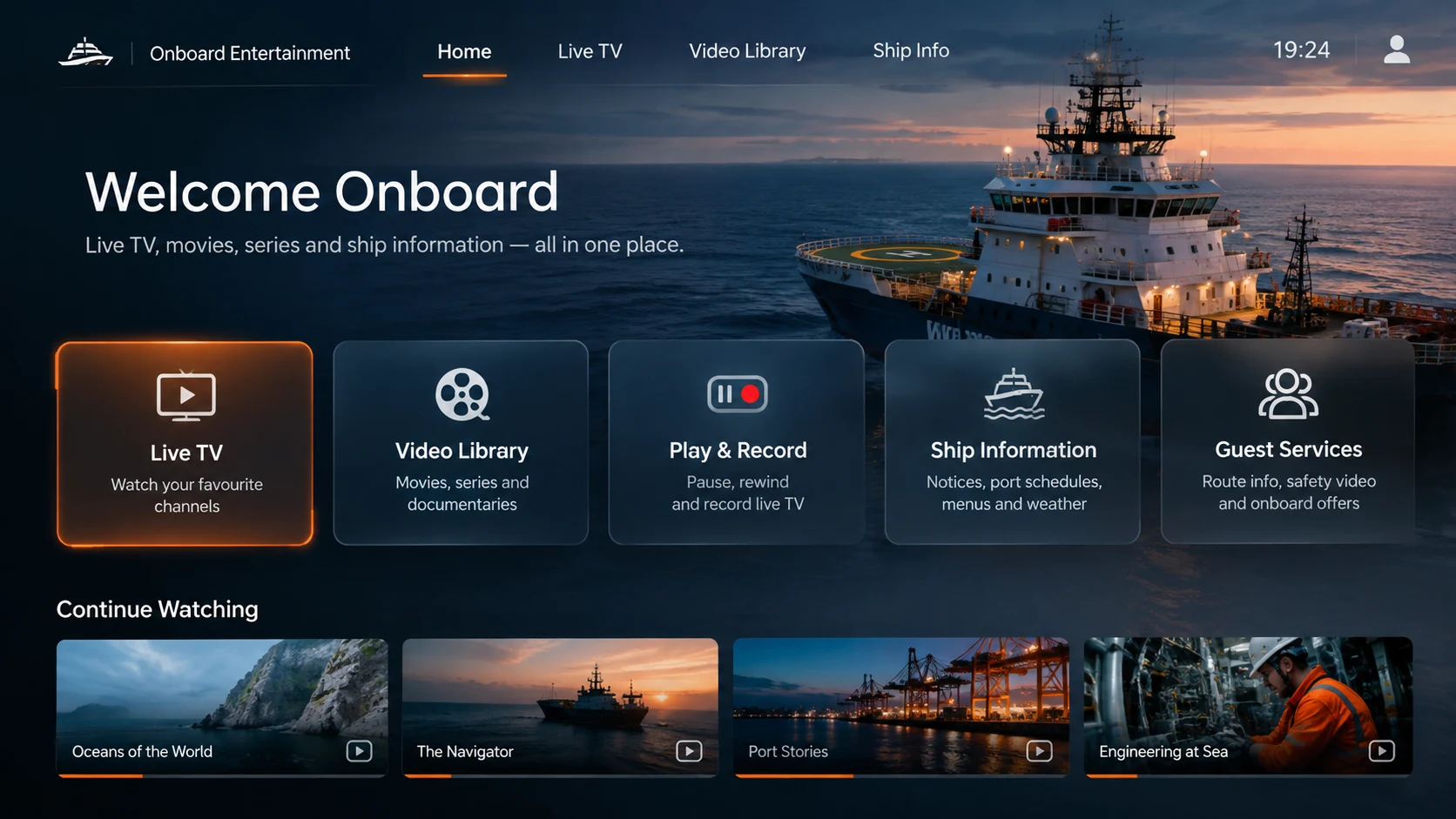
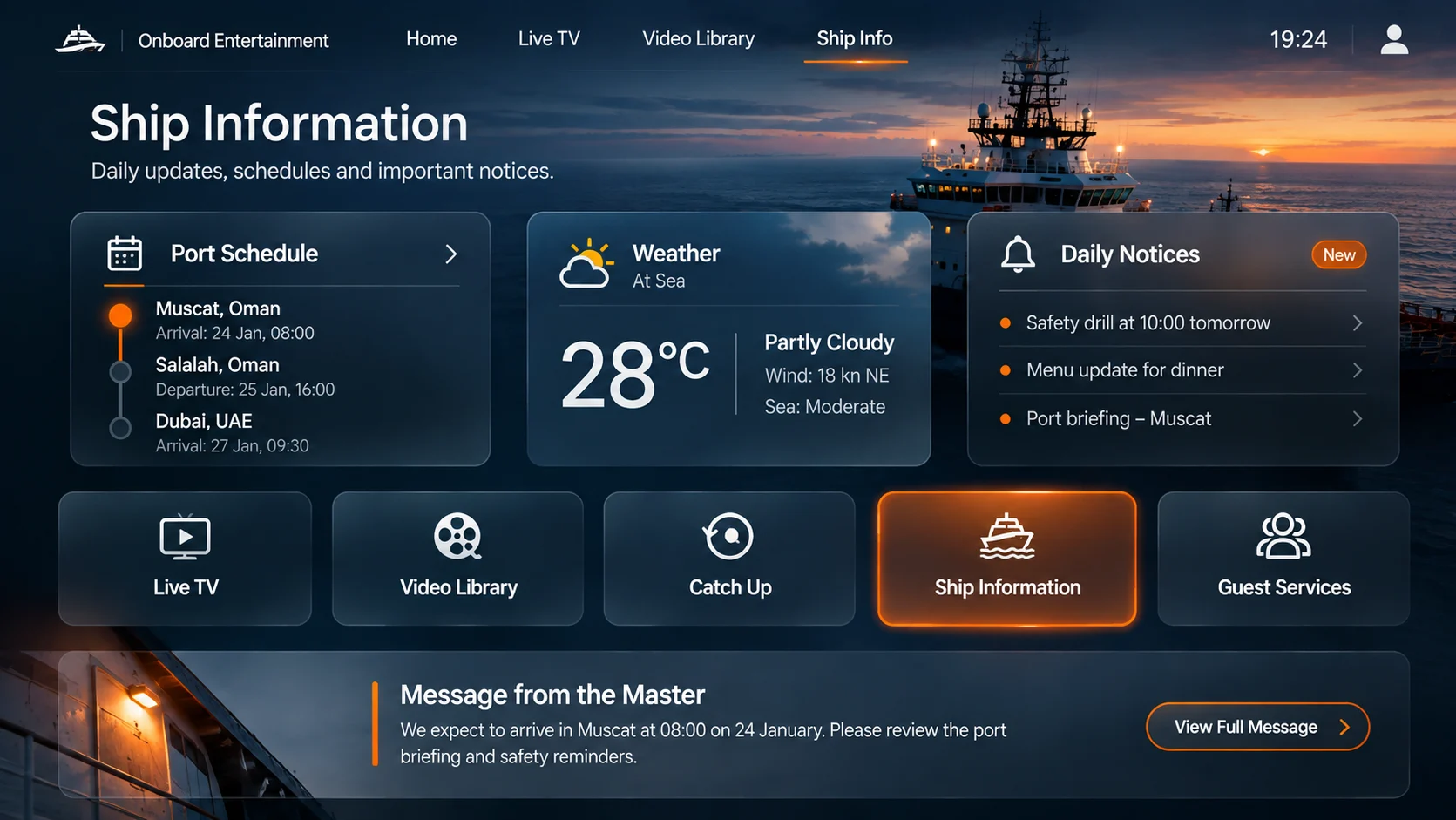
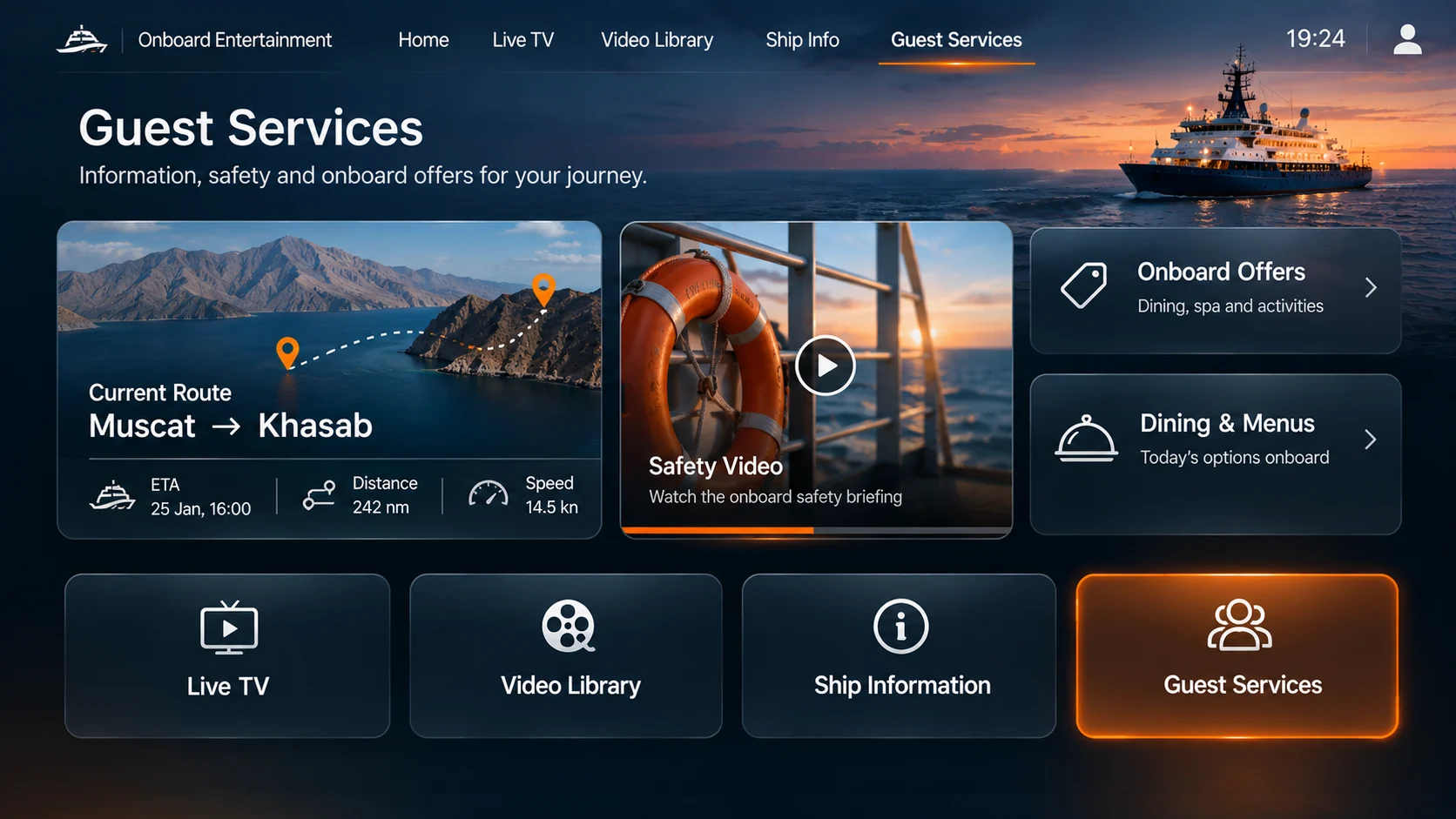
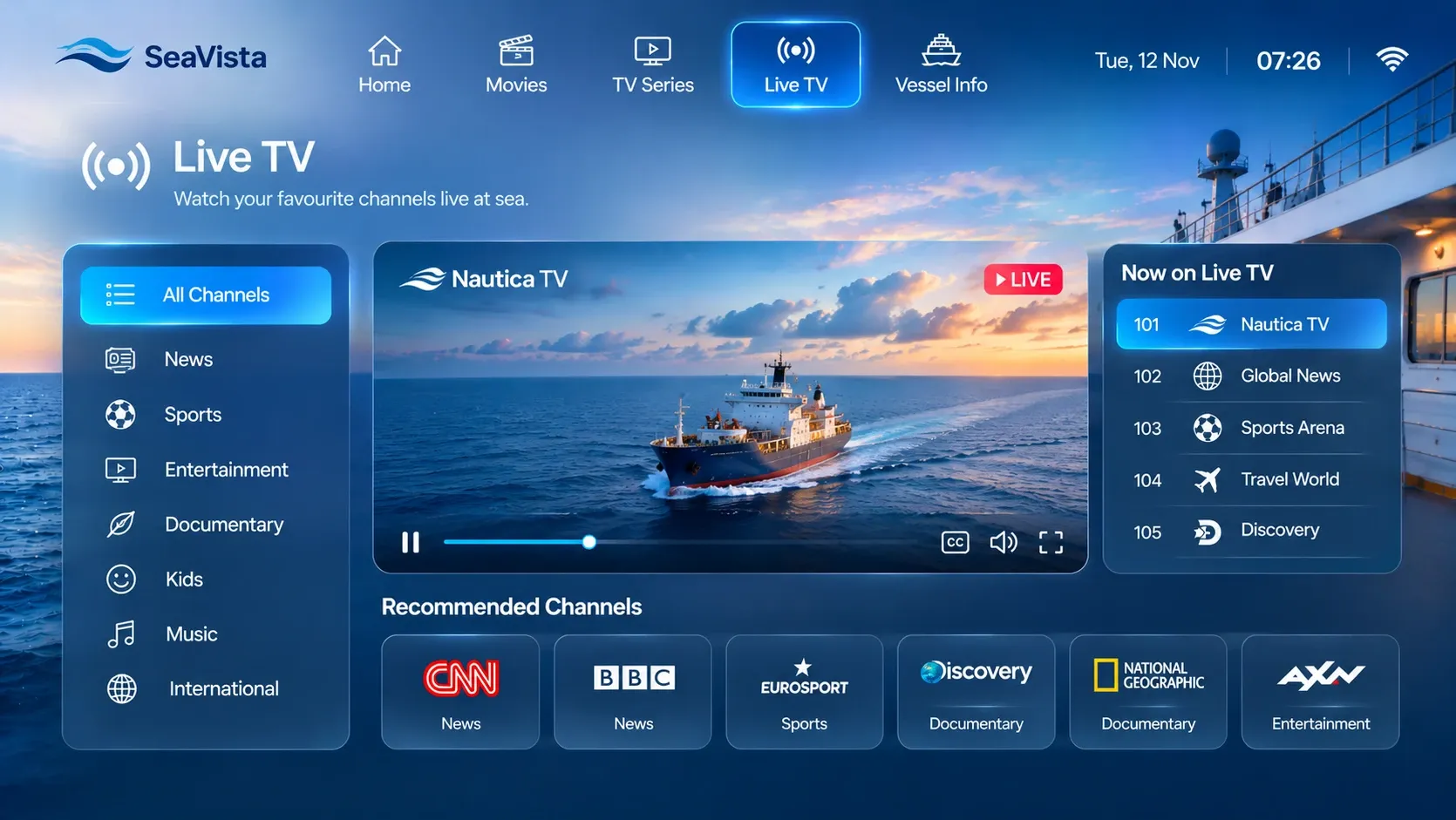
Onboard entertainment dashboard showing live television and video library Ship information dashboard displaying schedules, weather and notices Maritime guest services dashboard displaying passenger information and services

Entertainment is part of crew welfare. A reliable crew entertainment system takes the edge off long rotations, and where the Maritime Labour Convention (MLC 2006) applies to your vessel it expects suitable recreational facilities for seafarers. Crews also notice which ships look after them, which matters for retention.
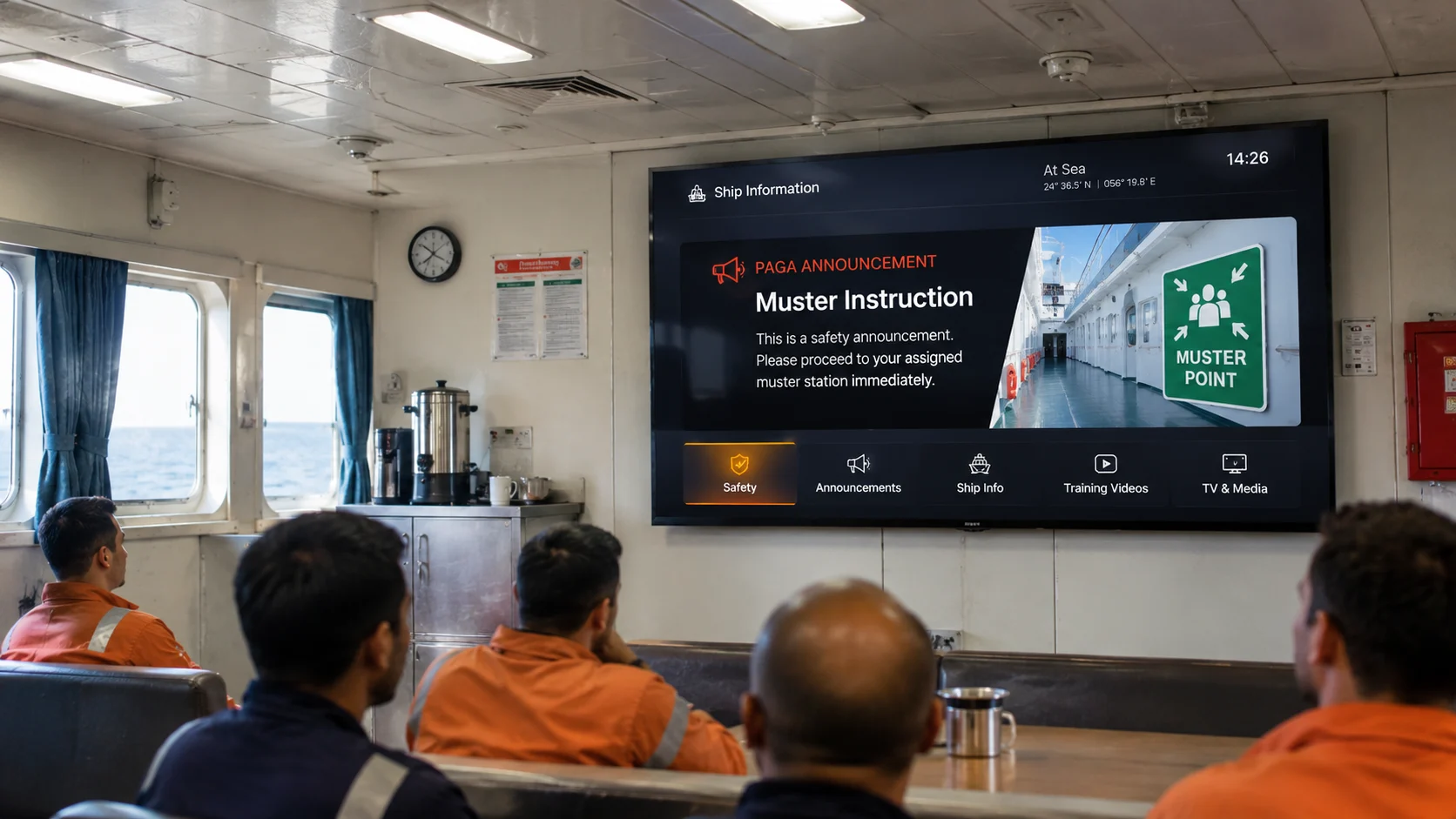
Maritime crew lounge displaying vessel safety and muster announcements on a television

Safety messaging: PAGA integration and training video

On a vessel, the TV network is also an information network. Where the ship’s public address and general alarm (PAGA) system allows it, we interface the IPTV so alarms and announcements take priority over whatever is playing. The same screens can then carry muster instructions, safety videos and drill reminders to the crew mess and lounges, where people actually sit.

The interface depends on the make and model of the PAGA system. We confirm it at a survey, before anything is promised.
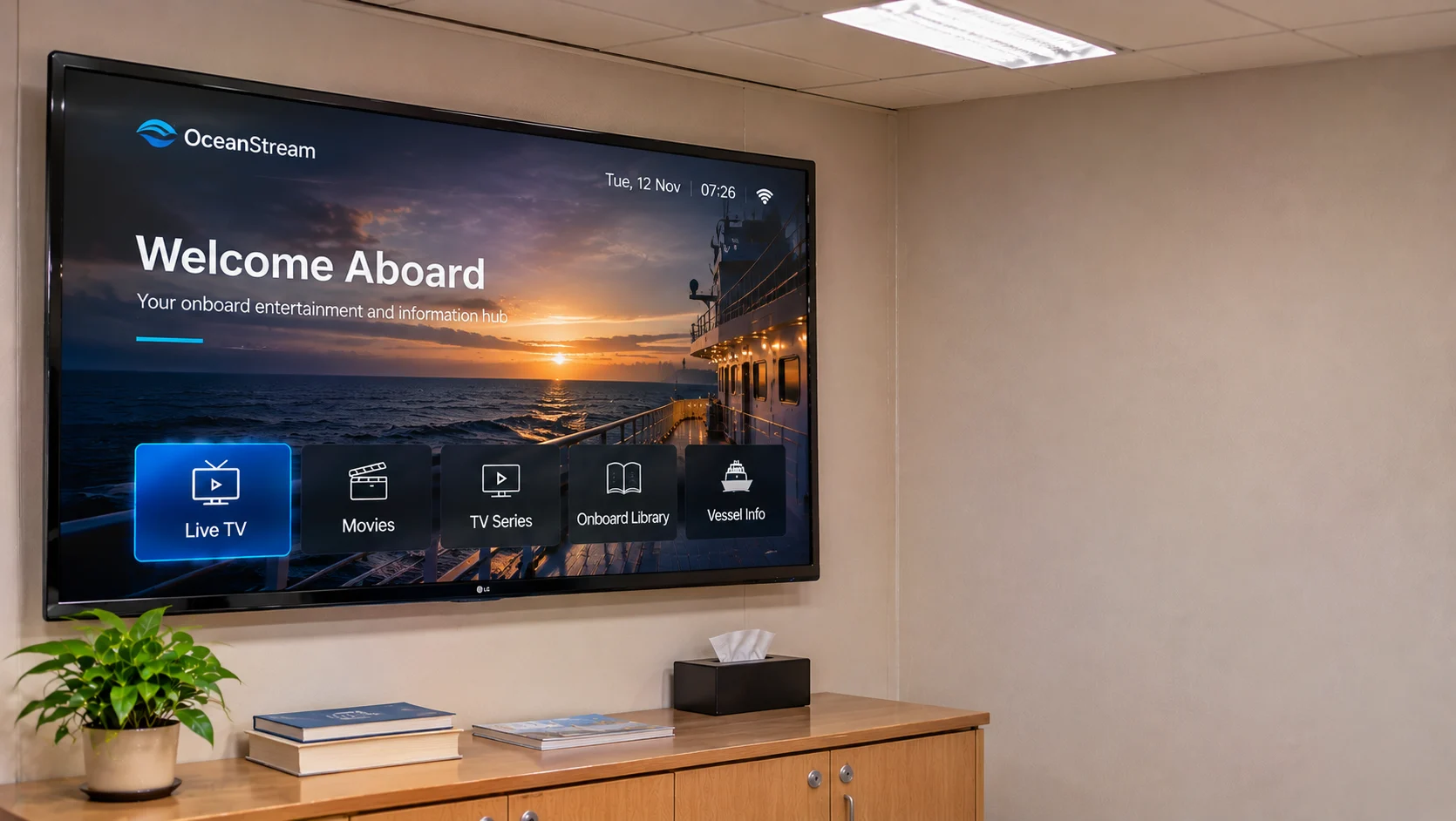
Shipboard lounge with an OceanStream maritime IPTV welcome screen

Low-bandwidth IPTV: TV without draining the satcom link

Satellite data on a vessel is metered, or shared with navigation, email and shore reporting. A hotel can lean on a building’s broadband; a ship cannot. So we design low-bandwidth IPTV on one principle: entertainment should not touch that link.

01

Live channels come from the satellite TV antenna as broadcast, not as internet streams.

02

The video library is stored onboard and updated in port, by the method that suits the vessel.

03

Screens, notices and safety messages all run on the ship’s own network.

A NOTE ON SATELLITE COVERAGE

Satellite TV only works inside a satellite’s coverage area. For vessels working the Gulf of Oman and Arabian Sea routes, regional coverage may be enough for live channels. On long deep-sea voyages the onboard library carries more of the load. We recommend the balance for your routes at survey.

IPTV onboard vessels: the types we design for in Oman

Different vessels have different onboard requirements. We plan each IPTV solution around the vessel, its crew, available space and operating conditions.
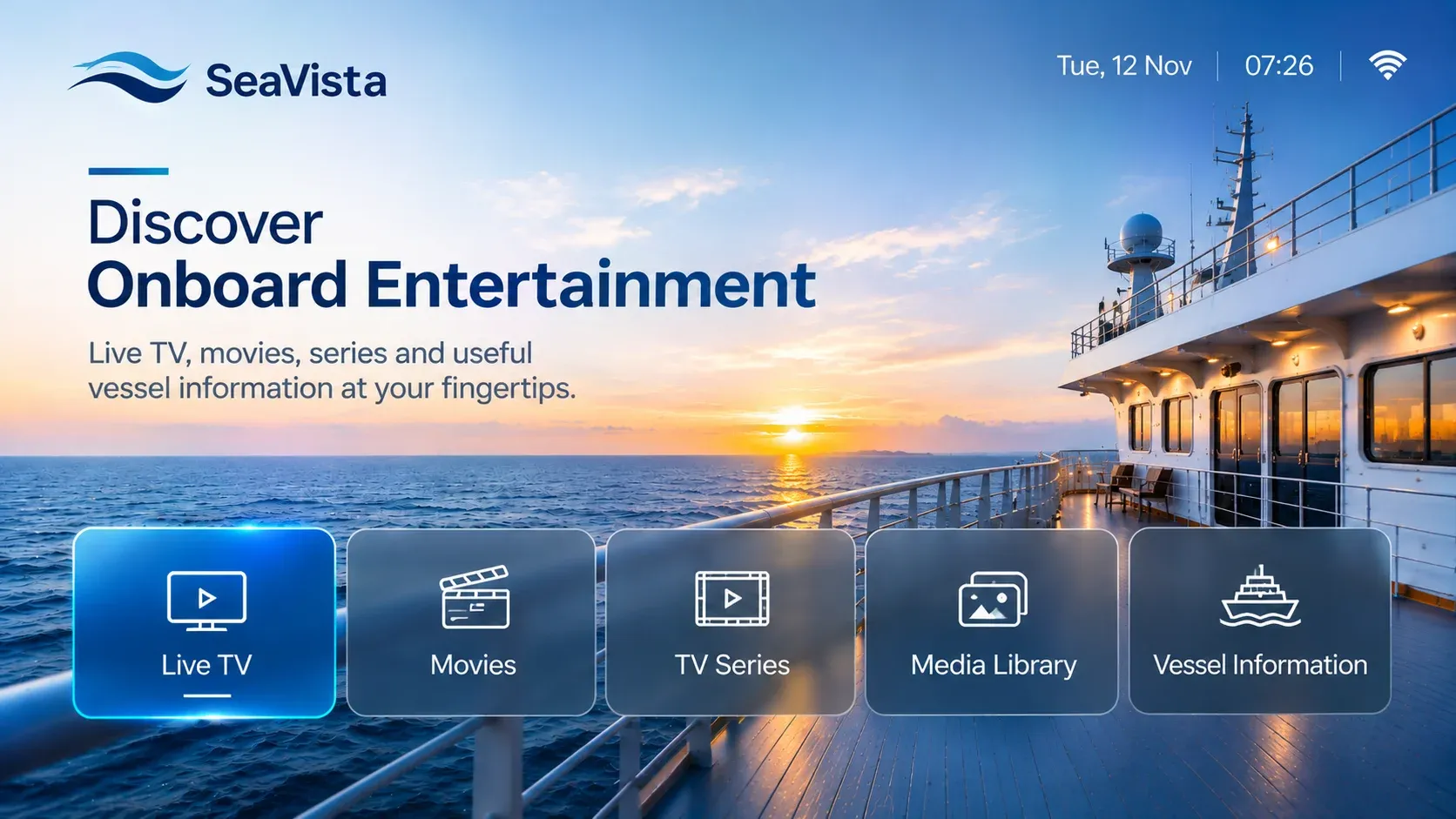
Maritime IPTV onboard entertainment welcome interface
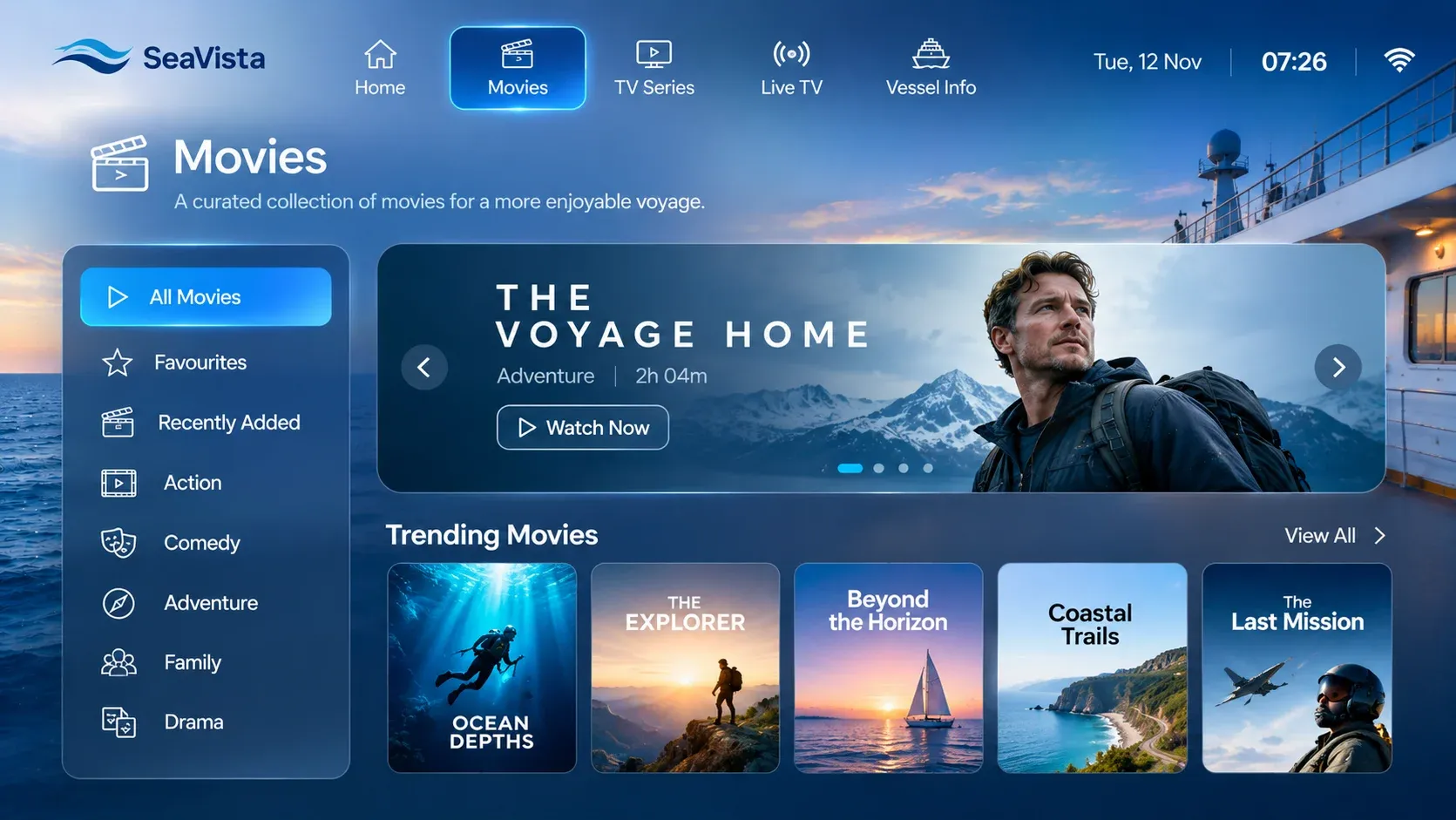
Maritime IPTV movie library interface with featured films
Maritime IPTV live television channel interface

Passenger information, a safety video before departure, route and timetable screens, and promotional content in lounges.

A guest-grade interface and discreet, compact equipment that fits the technical space available.

Simple crew entertainment that needs little attention and little space.

Long-voyage crew welfare, with a library that works with no internet at all.

Compact, low-power setups for small crews.

Whether the vessel is based in Muscat, Sohar, Duqm or Salalah, or runs along the coast, we plan installation around its port stay or layover.

Built for Oman’s operating conditions

Climate.

Equipment rooms get hot and the air along the coast is humid and salty. We specify ventilation, secure mounting and cable protection for those conditions.

Local engineers.

Our engineers are based in Oman, so a survey, a fault call or a port-stay installation does not wait for someone to fly in.

Language.

Arabic and English screens as standard, with other languages where the crew need them.

From survey to support

1. Survey. Onboard or from drawings: screen count, cable routes, equipment room, existing antenna and PAGA make.

2. Design and quotation. Headend and server sizing, channel plan and library plan.

3. Installation. Planned around a port stay, layover or dry dock so the vessel’s schedule does not slip.

4. Commissioning and handover. Testing with the vessel’s technical team and a short walkthrough for the engineer or radio officer who will look after the system.

5. Support. Remote help where the vessel has a link, scheduled visits when it is in port, and an IPTV annual maintenance contract so a fault does not wait for the next port call.

Maritime IPTV, also called marine IPTV, is a TV and information system that delivers live channels, a video library and onboard notices to screens across a vessel over its own network. What sets it apart is how it receives its signal, how it protects satellite bandwidth and how it connects to safety systems such as PAGA.
No. Live channels come from the satellite TV antenna and the video library is stored onboard, so the system runs without the vessel’s internet link.
Live channels pause until coverage returns, while the onboard library, the information channel and safety messages keep working. We plan the library size around the longest gaps on your routes.
Often, yes. It depends on the make and model of the PAGA system, which we check at survey. Where the interface is possible, alarms and announcements override whatever is playing.
No. The system scales from a compact setup for a workboat to cabin-wide coverage on a ferry. Cost depends on the number of screens, the signal sources, the size of the library and whether PAGA integration is needed.
In port, over the shore connection or from a storage drive, so it does not use satellite data. We agree on the update routine and the licensed content sources at the design stage.
We design the IPTV system around the vessel’s antenna. If the antenna needs replacing, or a supplier is already chosen, we coordinate with them so the headend and antenna work together.

Request a vessel survey

Tell us the vessel type, the number of cabins or screens and the routes it runs. We will come back with a survey plan and a system outline for your vessel.